Birthday Bets and Plate Numbers: Why Your Brain Wants Every Wager to Mean Something
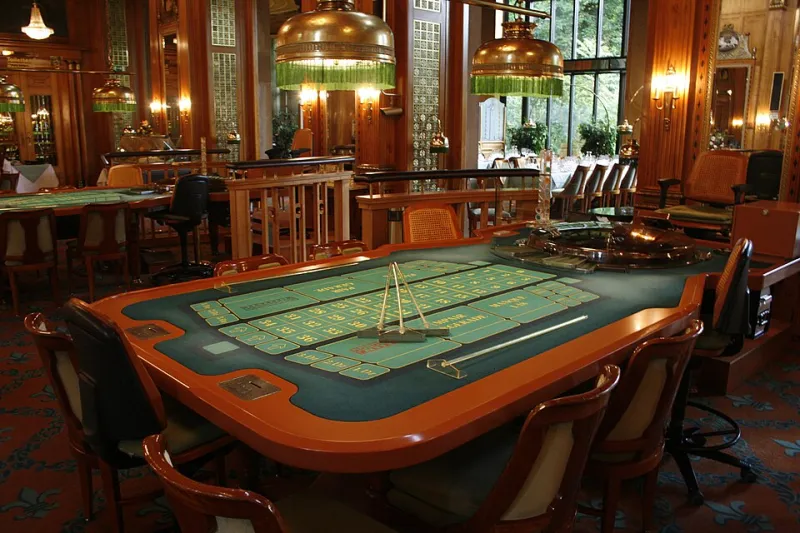
Photo: Sozi, Public domain, via Wikimedia Commons
Ask around any casino floor in America and you'll find it within five minutes: the guy in Detroit who only bets 27 because that's his wedding anniversary. The woman from Phoenix who plays her daughter's birthdate in every pick-3 drawing. The blackjack player who won't sit down at table 13 no matter how open the seats are.
Nobody taught them to do this. They just... do.
And if you're wondering whether a site literally named Good88F8 has an opinion on lucky numbers — yes. Yes we do. We're not above the pull. We've just decided to understand it.
The Birthday Betting Phenomenon
Personal dates are the most common numeric ritual in American gambling, and it's not close. Behavioral psychologist Dr. Elena Marsh, who studies decision-making and superstition, says the pattern shows up across every game type.
"Dates are the numbers people own," she told us. "You've rehearsed them your whole life. They carry identity. When a player bets their mother's birthday, they're not really betting a number — they're betting a story about themselves."
That's why the practice survives even when players know better. Plenty of our readers can explain house edge and RNGs in their sleep. They'll still drop $20 on the 14th of March because that's when their kid was born.
And honestly? As rituals go, it's fairly harmless — as long as the amount stays fixed.
Repeating Digits: The 88 Effect
Then there's the other camp: the repetition people. Double numbers, mirror numbers, and above all in gambling culture, the 8. Chinese numerology cast 8 as the fortune digit — its pronunciation echoes the word for prosperity — and the association has gone fully global. That's why every third new casino brand seems to be built on 8s (we plead guilty, with the F8 thrown in for good measure).
Dr. Marsh says repeating digits hit a different psychological switch than birthdays.
"Repetition reads as intentional. Random numbers feel arbitrary, but 88 feels like a signal," she explains. "The brain's pattern-detection system fires on symmetry. It's the same machinery that finds shapes in clouds."
The catch, she notes, is that symmetry is exactly what slot reels and lottery machines do NOT produce. Your ticket with 8-8 in it is precisely as likely as 3-9.
License Plates, Locker Numbers, and the Luck of the Specific
The third flavor of numeric superstition is the most charmingly irrational: numbers that were never chosen at all. The digits on your license plate. Your old apartment number. The jersey of the player who scored the winning goal at your bachelor party.
"These are numbers attached to random life events that happened to coincide with something good," Marsh says. "The gambler's memory keeps the hits and deletes the misses. You remember the night your plate number came up on roulette. You don't remember the eleven nights it didn't."
Confirmation bias, meet the craps table.
So Do Lucky Numbers Help or Hurt?
Here's where it gets practical. Marsh's take: the ritual itself is neutral. The danger is in what the ritual does to your stakes.
"A lucky number is fine when it's a constant — you always bet 27, always play your anniversary. It becomes a problem when it scales. Players start doubling down on 'their' number because it feels overdue. That's the gambler's fallacy wearing a birthday hat."
Her rules of thumb for keeping the superstition fun instead of expensive:
- Fixed stakes, always. Your lucky number gets the same bet whether it's won three times in a row or lost ten.
- No chasing. If your date-based number misses, the next spin is not "owed" to you. Reels have no memory and neither does the RNG.
- Never borrow luck. If your ritual requires money you wouldn't otherwise spend, it's not a ritual anymore. It's a reason.
- Enjoy the story. If betting your grandma's birthday makes a session more fun, that's real value — just budget for it like entertainment, because it is.
The Good88F8 Position on Luck
We'll come clean: we named this site the way we did because lucky numbers make people feel something, and feeling something is half of why anyone plays. The 8s aren't secretly boosting anyone's payout. Nothing is. The RNG doesn't care about your license plate.
But if you're going to lose a coin flip on entertainment, there are worse ways than doing it with a number that means something to you.
Just keep the bet the same size every time. Grandma would want it that way.
Dr. Elena Marsh's comments reflect general behavioral research, not individual financial advice. Play responsibly — lucky numbers are for fun, not strategy.