The IRS Called (Sort of): What Every Online Jackpot Winner Needs to Know Before Filing
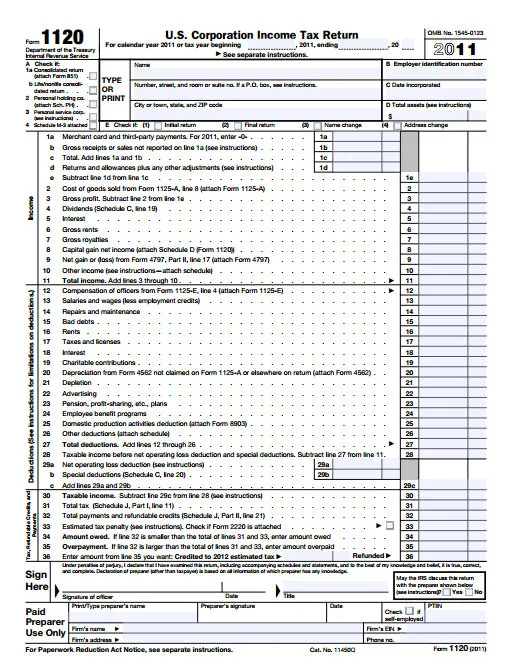
Photo: Internal Revenue Service, Public domain, via Wikimedia Commons
Nobody hits a jackpot thinking about the IRS. You're thinking about the confetti animation, the balance jump, the text you're about to send three people who won't believe you. But somewhere between the win and the withdrawal, the taxman becomes very interested in your good fortune — and most American players have no idea how it actually works.
We sat down with Dana Ruiz, a CPA in Nevada who specializes in gambling income, to break down what happens when an online win turns into taxable reality.
The Magic Numbers: When a Win Triggers Paperwork
The first thing players get wrong, Ruiz says, is assuming every win comes with a form attached.
"People think if the casino didn't send them a W-2G, the money isn't taxable," she told us. "That's backwards. All gambling income is taxable from dollar one. The W-2G is just the government's receipt."
For slots and online casino play, a W-2G generally gets issued when a single win hits $1,200 or more. For blackjack, craps, and other table games, the threshold sits at $1,500 with odds longer than 200-to-1, and keno winnings trigger paperwork at $1,500 as well. Poker tournaments have their own rules based on buy-in multipliers.
Here's the online wrinkle: not every offshore or sweepstakes-style platform issues forms at all. That doesn't change your obligation. If you cashed out $8,000 from a site that never asked for your Social Security number, you still owe taxes on it.
The Deduction Most Players Miss — and Why It's Harder Online
Gambling losses are deductible, but only up to the amount of your winnings, and only if you itemize. In the offline world, players keep player's club cards and ATM slips. Online, Ruiz says, the paper trail is actually easier — if you grab it.
"Your platform's transaction history is gold," she explains. "Download it. Every deposit, every bet, every withdrawal. Don't assume the site will keep it forever, and definitely don't assume a rogue operator will hand it over during an audit."
The catch: you can only deduct losses on Schedule A if you itemize. With the standard deduction as high as it is now, many casual players are better off taking the standard route — which means every dollar of winnings is taxable and none of the losses count. That stings, and it's worth knowing before you file, not after.
State Lines Change Everything
Federal withholding on gambling wins above $5,000 is typically 24% for certain wager types, but online platforms are inconsistent about withholding, and your state may want its cut regardless.
A few examples of how differently states treat winnings:
- No income tax states like Texas and Florida — your only obligation is federal.
- Flat tax states like Pennsylvania (3.07%) treat it simply.
- High-tax states like New York and California can take a serious bite, with top rates approaching 10% or more.
And a fun quirk: some states tax gambling winnings even for visitors. Win online while vacationing in a state that taxes nonresident winnings, and you may owe two states. Ruiz's advice: "If you had a big year, talk to someone before April. An hour of a CPA's time is cheaper than penalties."
Bonus Cash Is Not Free Money — Tax Edition
Here's the mistake that catches bonus players hardest. You claim a $500 sign-up bonus, run it through wagering requirements, and cash out $1,400. Guess what's taxable? The full $1,400 — not the $900 "profit," because the bonus itself was income the moment it had real value.
Players also get burned by treating promo credits and sweepstakes entries as non-taxable. Sweepstakes prizes absolutely are. If you wouldn't call it a gift from grandma, the IRS probably considers it income.
The 88-Second Record-Keeping Checklist
Ruiz's audit-proof system takes less than two minutes a session:
- Screenshot the win. Balance before, balance after, date, game.
- Export monthly statements from every platform you use.
- Keep a simple log — a spreadsheet works — of deposits, withdrawals, and bonuses claimed.
- Save W-2Gs forever (or at least seven years).
- Note your state and any states you played from, if you travel.
"The players who survive audits are the ones who can reconstruct the year," Ruiz says. "The players who panic are the ones who deleted their account history because they closed a site."
The Bottom Line
A jackpot is still a jackpot after taxes — but only if you plan for the haircut. Set aside a chunk of any significant win, download your records the same week, and treat every bonus like the taxable event it is. The number 8 might be lucky, but the IRS doesn't believe in luck. It believes in documentation.
If you or someone you know is struggling with gambling, help is available at the National Problem Gambling Helpline: 1-800-522-4700.