One Machine, All Night: The Case Against Chasing Every Sign-Up Bonus in Sight
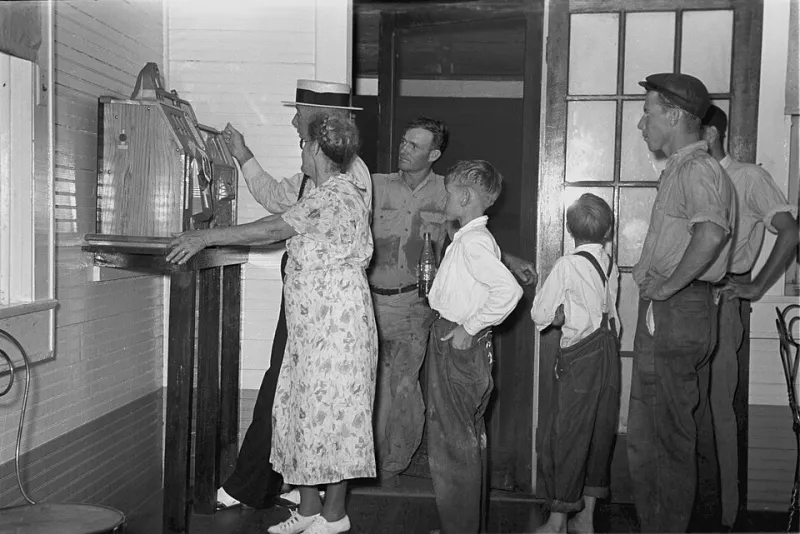
Photo: Russell Lee, Public domain, via Wikimedia Commons
There's a certain type of player you'll find in every online casino forum from Reddit to Discord. They've got spreadsheets. They've got alerts set up for every new-player offer from Maine to Nevada. They call it "the grind," and they'll tell you — loudly — that stacking sign-up bonuses is the only mathematically sound way to gamble online.
Then there's the other camp. Smaller, quieter, and frankly less fun at parties. They play one game. They play it long. And they claim that over time, they come out ahead of the bonus choppers.
We spent a few weeks talking to both sides, running variance math, and stress-testing the whole thing against how Americans actually gamble in 2025. Here's what we found.
The Bonus Chaser's Gospel
The logic behind promo stacking isn't crazy. Sign-up bonuses are, on paper, free expected value. A 100% match up to $200 with reasonable wagering requirements hands you extra playing capital you didn't have before. Repeat that across eight or ten licensed US casinos, and you've manufactured a few hundred dollars of theoretical edge.
"Every bonus is a gift with strings attached," Marcus, a bonus-hunting enthusiast from Ohio, told us. "The strings are the playthrough. But if you only play the low-volatility games to clear the requirement, the strings are loose. Do that ten times and you're up real money before you've ever really gambled."
On paper, he's right. The problem is what happens after the spreadsheet meets reality.
Where the Grind Falls Apart
Talk to bankroll-management advocates and the first thing they'll point out is attrition. Not mathematical attrition — psychological attrition.
"Bonus chasing is a second job with worse hours," says Dana K., a bankroll coach who works with recreational gamblers. "You're managing ten accounts, ten sets of terms and conditions, ten withdrawal verification processes. The moment you're tired or tilted, you stop playing the strategy and start playing the games. And that's where the house edge is waiting."
There's a mathematical wrinkle too, and it's the one nobody puts in the YouTube thumbnails: variance. Clearing a bonus on a low-volatility game works in the aggregate — across hundreds of bonuses. In any single run, the standard deviation can swamp the expected value. Lose a bonus-clearing session badly (it happens more often than the grind community admits), and you've now got to clear two or three more offers just to get back to breakeven on the "free money."
Add in the time cost — bonus hunters routinely log 20-plus hours a week on wagering requirements alone — and the effective hourly rate starts looking like a job that pays in scratch-offs.
The Single-Session Argument
The disciplined-session crowd makes a different pitch. Pick one game you understand. Set a fixed session bankroll — say, $88, because we know a thing or two about lucky numbers here at Good88F8. Play it for a defined block of time with fixed bet sizing, and stop when the clock or the bankroll says stop, whichever comes first.
"It's boring on purpose," Dana says. "Every session is a controlled experiment with a known cost. You never risk more than you decided in advance, you never chase, and because you're playing one game, you actually learn its rhythm — when it's volatile, how the bonus round hits, what bet sizing keeps you at the table."
Does it beat the house edge? No. Nothing does, long-term, and anyone telling you otherwise is selling something. But the single-session player isn't trying to beat the house. They're trying to maximize entertainment per dollar and minimize the catastrophic-loss scenarios that end gambling careers. On those metrics, the math favors them heavily. A bankroll divided into 10 planned sessions lasts dramatically longer — and produces more actual playing time — than the same bankroll fragmented across a dozen bonus-clearing sprints.
There's also a compounding benefit the bonus chasers don't get: loyalty. Consistent play at one licensed casino builds VIP-tier status, reload offers, and cashback that arrive without a new sign-up hunt. Over a year, a steady single-site player often accumulates more in comped value than the grinder collects in one-time welcome offers.
The Counterpoint, Fairly Stated
The bonus crowd has a real rebuttal, and it deserves an honest airing. If you are genuinely disciplined — if you truly only play minimum bets on low-volatility games until a requirement clears, and you cash out immediately — the expected value per hour can beat casual play. Some people do this successfully. They're rare, they're methodical, and they don't post their losing weeks.
The honest framing is this: bonus stacking is a high-discipline strategy that most people execute with low discipline. Single-session bankrolling is a low-drama strategy that works almost exactly as intended for almost everyone who tries it.
Our Verdict
If you've got the temperament of an actuary and the free time of a retiree, chase your bonuses and may the variance be kind. For everyone else — the people who gamble to unwind after work, who want a Saturday night of entertainment that doesn't evaporate in 20 minutes — the boring answer wins. One game, one session, one fixed bankroll, and a hard stop.
It won't make you a spreadsheet hero. But at 1 a.m., when the last bonus requirement is mocking you from a tab you've had open since Tuesday, you might wish you'd taken the boring road.
Play smart, set limits, and if gambling stops being fun, stop. Help is available at 1-800-GAMBLER.