The Chime Doesn't Mean You Won: Decoding the Slot Soundtrack That Fools Your Brain
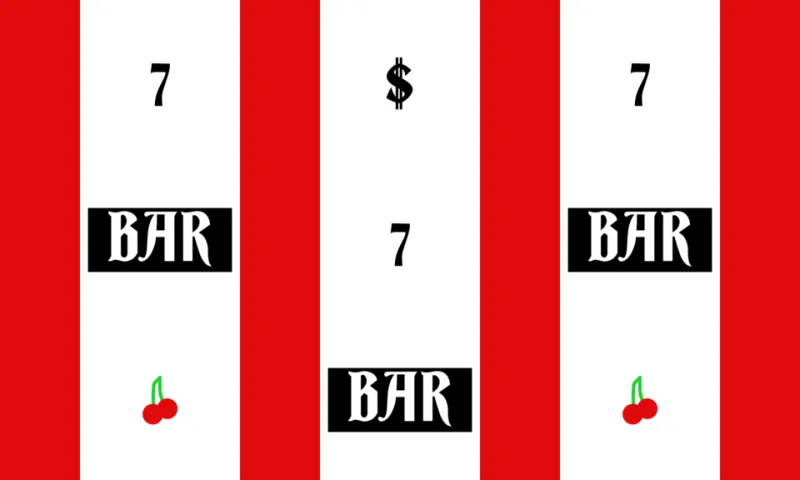
Photo: Icandostuff, CC BY-SA 4.0, via Wikimedia Commons
The sound hits before the math does. Chimes, a cascade of coins, a number flashing on the screen — and then you glance at the credit meter and realize you are down forty cents on the spin.
That is not a glitch. It is a design decision, and it has a name.
What a Loss Disguised as a Win Actually Is
A loss disguised as a win — LDW in the research literature — is a spin that returns something, just not as much as you wagered. Bet two dollars, get back a dollar twenty, and the machine celebrates. The reels light up, the audio track plays a win jingle, and for a second and a half your body reacts as if you made money.
You didn't. You lost eighty cents.
The tell is always the same: the celebration fires whenever the payout is greater than zero, not whenever the payout beats the bet. On plenty of modern video slots, LDWs make up a big share of all winning spins — often the majority on low-volatility games built around frequent small pays.
Your Brain Files the Fanfare, Not the Ledger
This is not speculation. Researchers at the University of Waterloo ran a series of studies in the 2010s putting slot players in front of machines rigged to produce LDWs while measuring physiological arousal. Skin conductance, heart rate, self-reported excitement — all of it jumped on LDWs the way it jumped on genuine wins. Players also consistently overestimated how often they were actually ahead.
The audio does a lot of the work. Sound is cheap, immediate, and it lands before conscious thought. A cascade sample that runs two seconds is enough to trigger the something-good-happened response, and by the time your eyes reach the credit meter, your body has already logged a win.
Why Designers Bother
Slot lobbies are attention markets. Time on device is the metric that matters, and LDWs buy time. They keep a losing session feeling eventful instead of flat. A player who sees ten celebrations in five minutes is more likely to keep spinning than a player watching a silent, slowly draining balance — even when both players are losing at identical rates.
There is a near-miss cousin doing similar work. Reels that stack two jackpot symbols and stop the third just above the payline, expanding wilds that almost connect, bonus teases that flash three scatters and land two. None of it changes the math of the next spin, which is independent every time. All of it changes how the session feels.
What US Regulators Actually Allow
Here is the uncomfortable part: LDWs are legal nearly everywhere slots are legal in the United States. State gaming regulators and the independent labs that certify machines generally require the amount won to be displayed accurately — the credit meter has to tell the truth — and many jurisdictions have rules about how a win is presented on screen. What they do not require is that a sub-wager payout be framed as a loss.
So the meter is honest and the presentation is not. Both things are true at once, and the gap between them is where the industry lives. Tribal compacts, state gaming boards, and online licensing regimes each handle the details differently, but the pattern holds: disclosure of the number, not the meaning.
Retraining Your Ears in Four Moves
You cannot change the software. You can change what you pay attention to.
Read the meter, not the screen. Before each spin, note the credit balance. After the celebration ends, note it again. That delta is your only real result. Do it for ten spins and you will have a far clearer picture than the animations gave you.
Count net, not events. At the end of a session, divide your total result by the number of spins. A game that feels like it pays constantly can still be costing you thirty cents a spin.
Kill the volume when you test a new game. Most online slots have a mute toggle. Play twenty spins silent and see whether you still think the game is hot. If the perception disappears without the audio, the audio was the perception.
Log one number per session. Not a spreadsheet, not a system — just the starting balance, the ending balance, and the date. Players who keep this up for a month tend to report the same thing: the sessions they remembered as break-even were usually the noisiest ones.
The Eighty-Eight Cent Rule
If there is one habit worth stealing from this piece, it is this: treat any payout below your bet as a loss, full stop. Say it out loud if you have to. Eighty-eight cents back on a two-dollar spin is a loss of a dollar twelve, no matter what the machine sings about.
The math was always going to be the math. The only question is whether you are reading the meter or listening to the soundtrack.