Hot Streaks, Cold Machines, and Other Fairy Tales: A Numbers Expert Explains How Slot RNGs Really Work
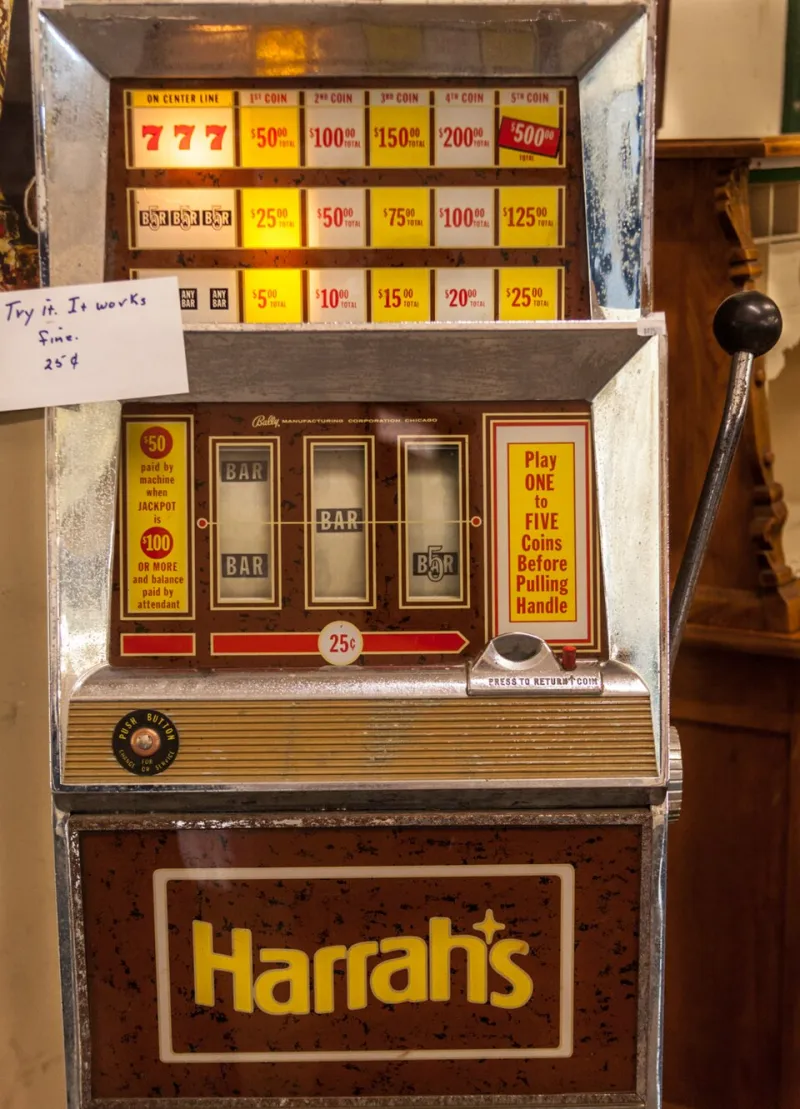
Photo: Paul VanDerWerf from Brunswick, Maine, USA, CC BY 2.0, via Wikimedia Commons
There's a moment every slots player knows. You've been feeding the same machine for twenty minutes, the reels keep teasing you with two cherries and a miss, and a voice in your head whispers: it has to hit soon.
That voice is lying to you. And to understand why, we need to talk about the single most misunderstood piece of technology in American gambling: the random number generator.
To sort fact from folklore, we sat down with "Dr. Vera Noor," a hypothetical gaming-mathematician persona we've built for this explainer. Her answers won't always be what players want to hear — but they're what every US slots fan should know.
First Things First: What Is an RNG, Actually?
"Strip away the flashing lights and the bonus rounds, and a slot machine is just a very fast dice roll happening thousands of times per second," Dr. Noor explains. "The RNG is a computer program that continuously generates random number sequences — even when nobody is playing. The instant you hit spin, the machine grabs whatever number is on the clock at that exact millisecond and maps it to a reel outcome."
Key point: the result is decided the moment you press the button. The spinning reels you watch afterward? Pure theater. "The animation is entertainment," she says. "The math already happened."
This is true whether you're playing on the Las Vegas Strip or at a licensed US-facing online casino. Regulated slots in states like New Jersey, Pennsylvania, and Michigan are independently tested by labs such as GLI and eCOGRA to make sure those RNGs are genuinely random and that the advertised return-to-player (RTP) percentages are honest.
The 'Due' Machine Doesn't Exist
Here's the myth we hear most: a machine that hasn't paid out in a while is "due" for a win. Dr. Noor doesn't hesitate when asked about it.
"There is no memory in the system. None. The RNG doesn't know how long you've been playing, how much you've lost, or what happened on the last spin. Every single spin is an independent event with the same odds as the one before it."
She offers a coin-flip analogy. If you flip ten heads in a row, the odds of the next flip being tails are still 50/50. Slots work the same way, just with far worse odds dressed up in better graphics.
"A machine that just paid out a $100,000 jackpot has exactly the same chance of paying it again on the next spin as it did the first time," she adds. "Hot machines and cold machines are stories we tell ourselves."
Why Our Brains Fall for It Anyway
So if the math is this clean, why do half the players on any casino floor swear they can 'feel' when a machine is warming up?
Blame something psychologists call the gambler's fallacy — plus a cousin of it, apophenia, the human talent for finding patterns in pure noise. "We evolved to detect patterns. It kept our ancestors alive," Dr. Noor says. "The downside is that we see streaks, hot hands, and lucky timing in systems that are completely random."
Slot designers know this. Near-misses, celebratory sounds on small wins, and loss disguised as a win (you bet $1.50, 'won' $1.25, and got a fanfare) all feed the pattern-seeking machinery in our heads.
So What Can You Actually Control?
If the spins themselves are out of your hands, is there anything a player can do? Dr. Noor says yes — just not what most people hope.
"You can't control outcomes. You can control three things: which games you play, what you bet, and how long you play."
Her practical checklist:
- Check the RTP. Online slots typically range from 92% to 97% return-to-player. Higher RTP means the house edge is smaller over time. It's usually listed in the game's info or paytable.
- Understand volatility. High-volatility games pay rarely but big; low-volatility games drip out small wins. Neither is 'better' — pick the one that matches your bankroll and patience.
- Bet within your budget. A smaller bet size dramatically extends your session, which matters more for enjoyment than any strategy ever will.
- Set a hard stop. Time limits and loss limits — most regulated US online casinos offer them as built-in tools. Use them.
The Lucky Number Takeaway
Look, at Good88F8 we love a lucky number as much as anyone — 88 is in our name for a reason. But there's a difference between playing for fun with a little superstition sprinkled on top and making decisions based on math that doesn't exist.
"Superstition is part of the fun of gambling, and there's nothing wrong with picking a machine because you like the number 8 on it," Dr. Noor says with a laugh. "Just don't confuse it with strategy. The RNG doesn't care about your lucky number. But it also doesn't care about your losses. Every spin is a fresh start."
And honestly? That might be the most reassuring thing about the whole system. The machine isn't against you. It isn't holding out. It's just rolling those invisible dice — one millisecond at a time.
Play responsibly. If gambling stops being fun, call 1-800-GAMBLER for free, confidential support.